
Developed through NASA-affiliated initiatives
Originated Through NASA Programs
Horizon X Labs builds upon research concepts originally developed through participation in NASA-affiliated programs, including the NASA L’SPACE Academies and the NASA SUITS Design Challenge.
While these projects were not selected for final funding, they laid the foundation for continued independent development, refinement, and simulation-driven exploration.
Funding and Collaboration
Horizon X Labs is actively seeking research funding, grants, and collaborative opportunities to advance its work in advanced engineering systems and simulation-based design.
Potential partners and funding sources include organizations such as NASA, the National Science Foundation (NSF), the European Space Agency (ESA), and industry collaborators.
Research Orgins:
NASA L’ Space Proposal Writing Evaluation and Experience (NPWEE)
NASA L’ Space Misson Concept Academy
NASA Spacesuit User Interface Technologies for Students (SUITS)
and much more!
Research & Systems Development
Horizon X Labs focuses on the conceptual design, modeling, and analysis of advanced engineering systems. Our work integrates system-level thinking with simulation-driven development to explore next-generation solutions.
1. AI & Intelligent Systems
Development of AI-assisted frameworks for real-time decision support, human-system interaction, and augmented operational environments.
2. Propulsion & Flight Systems
Exploration of advanced propulsion concepts and high-speed transport systems through integrated design and performance modeling.
3. Modeling & Simulation
Use of analytical methods and MATLAB-based simulations to evaluate system performance, validate concepts, and guide design decisions.
Core Capabilities:
System Architecture Design
Performance Analysis
Concept Validation
Simulation-Based Development
Synchronized Adaptive Feedback with Augmented Reality (SAFAR)
SAFAR Research Presentation at the New York Institute Of Technology
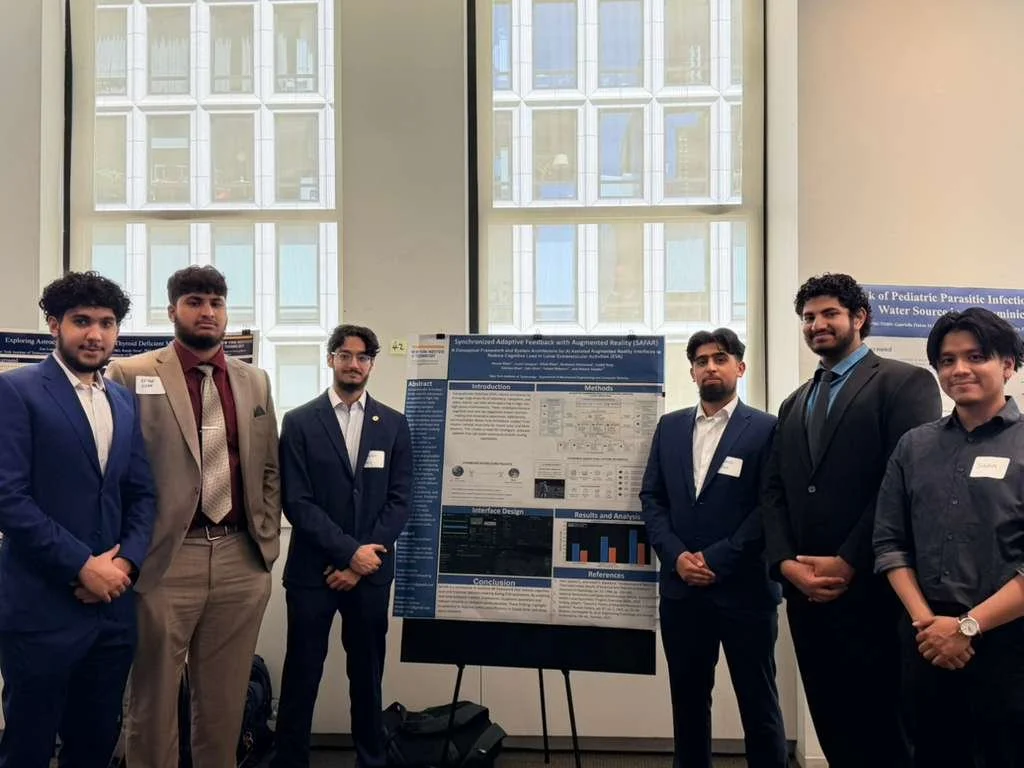
SAFAR originated as a concept developed for the NASA SUITS Design Competition, where it was proposed as an AI-assisted system to support human decision-making in complex operational environments.
Following the competition, the concept was further developed into an independent research initiative, expanding its system architecture, analytical framework, and simulation-driven approach.
This work is being formalized into a research paper and presented at the New York Institute of Technology symposium, where the project was showcased through technical discussion.
Ongoing efforts continue to refine the system through modeling, evaluation, and iterative design.
The SAFAR system was presented through detailed technical discussions, highlighting its system architecture, design methodology, and simulation-driven development. Attendees engaged with the project through direct interaction, providing valuable feedback on its potential applications and future direction.
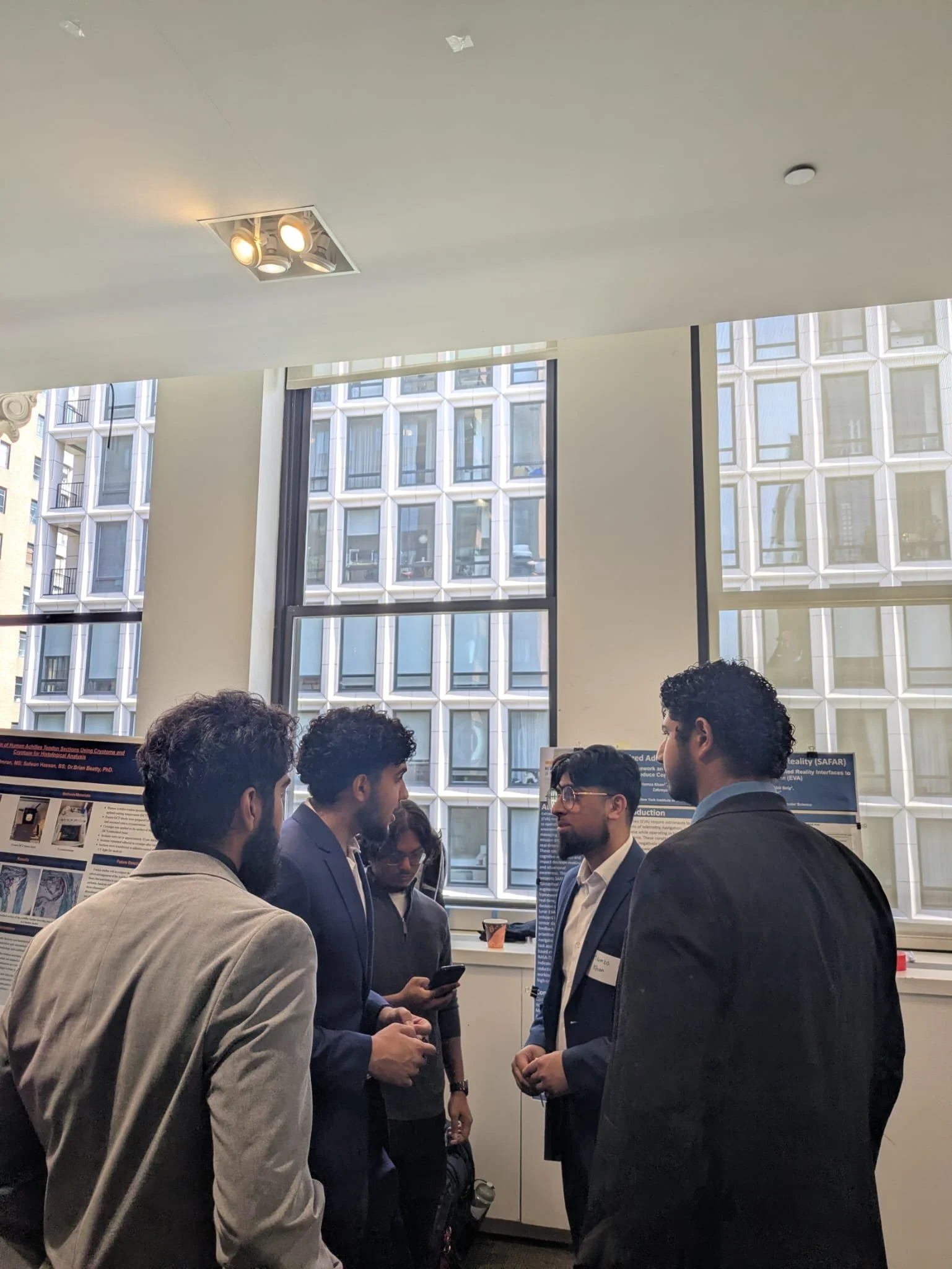
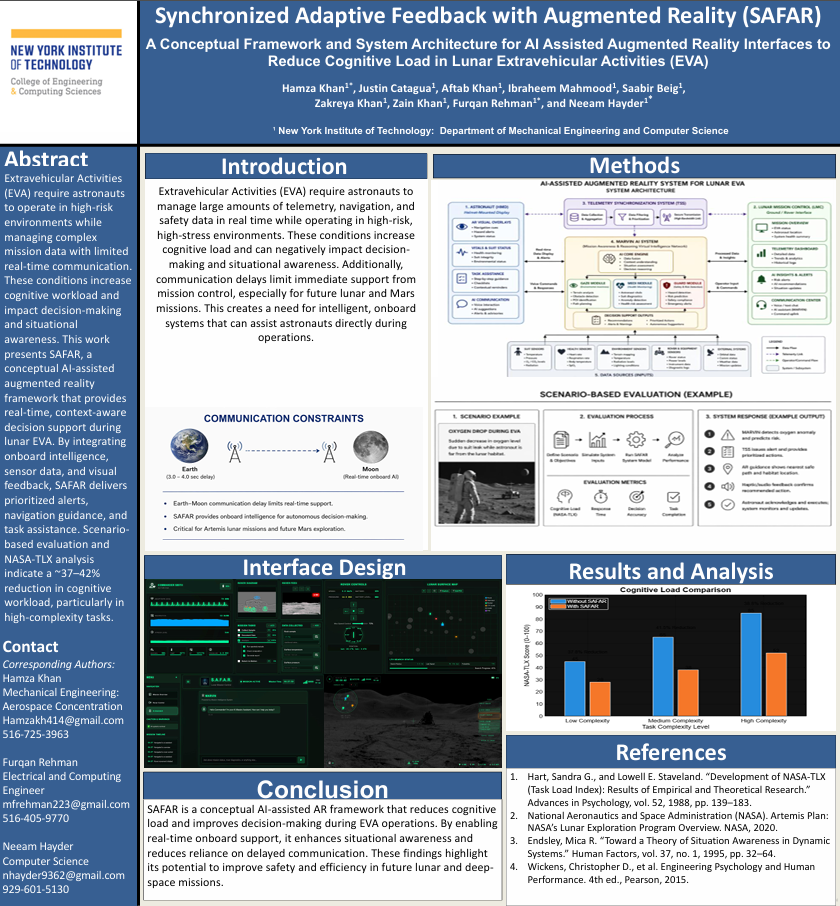
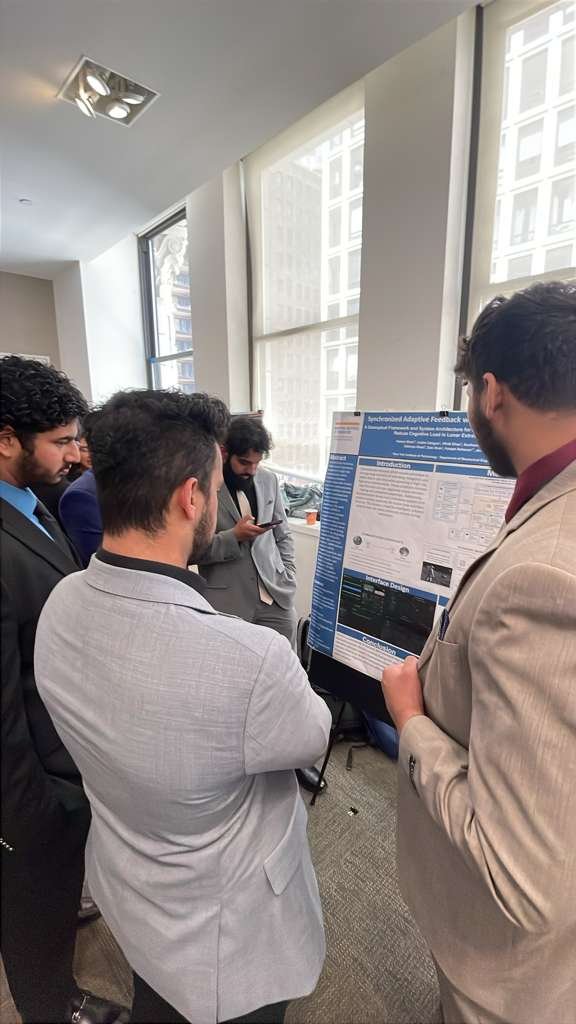
The presentation fostered collaborative dialogue among students and faculty, emphasizing the interdisciplinary nature of the project. These interactions contributed to refining the system’s conceptual framework and strengthening its overall research direction.
The SAFAR system was developed as a conceptual framework integrating AI-assisted decision support with augmented interfaces to reduce cognitive load in high-demand operational environments. The project combines system architecture design, scenario-based evaluation, and interface development to demonstrate its feasibility through simulation-driven analysis.
Our Team
We Stand For
Innovation, Precision, Advancement.
A collaborative research initiative composed of undergraduate, graduate, and postgraduate students with backgrounds in engineering, computational modeling, computer science, and system design.
Led by Project Investigator Hamza Khan, the team focuses on advancing conceptual engineering systems through analytical modeling, simulation, and system-level development.
Work is organized across multiple project teams, including SAFAR and TRIDENT, where interdisciplinary collaboration drives innovation in intelligent systems and advanced engineering design.

Hamza Khan
Project Investigator

Aftab Khan
Project Manager
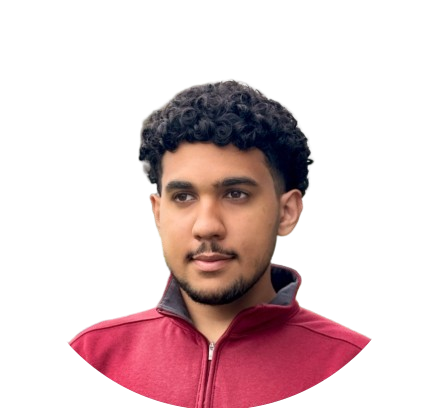
Zakreya Khan
Machine Learning Engineer

Neeam Hayder
Computer Science Engineer
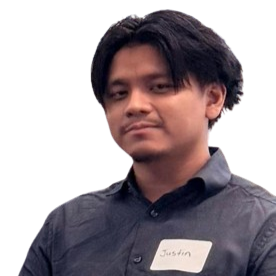
Justin Catagua
Chief Scientist

Furqan Rehman
Electrical and Computing Engineer

Saabir Beig
Deputy Project Manager of Resources

Ibraheem Mahmood
Mechanical Engineer
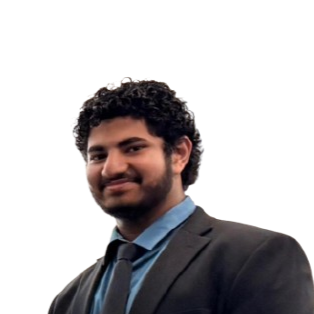
Zain Khan
Machine Learning Engineer
Ready to Dominate?
Contact us today!